Vacation: Use It to Learn from Your Family’s Elders!

During the summer, people often get together with their extended families, offering a great opportunity for summer elder wisdomfun, recreation – and gathering elder wisdom!
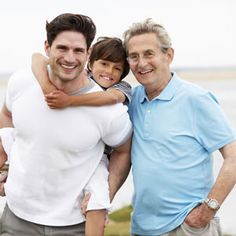
Why not use this time to encourage your kids to have meaningful “elder wisdom” conversations with the elders in your family?

Older people are a unique source of advice for living for younger people. And we need to tap this source much more vigorously than we are currently doing — both for young people’s sake and that of our elders.

We often do ask our elders to tell their life stories. But that activity is very different from asking their advice. You don’t just want their reminiscences; what’s truly valuable are the lessons they learned from their experience and that they wish to pass on to younger generations.

So while we are visiting older relatives, why don’t we all  take an hour (okay, it can be before or after the trip to the beach) to consult our elders about their lessons for living?

Your children are the best ones to start this conversation and they can ask questions that are highly relevant to them. Is Sammy concerned about bullying? Some elders (especially immigrants) were ferociously bullied as children. Is Pat concerned about finding the right partner? You have elders who have long experience in relationships, but who are rarely asked for their advice about them. Are your college kids worried about the job market? If so, how about advice from people who went through the Great Depression?

Remember that this is different from asking Grandpa “What did you do in World War II?” or Grandma “What was life like in the Depression?” The goal is to genuinely and interestedly ask for advice: “What lessons for living did you learn from those experiences?” Taking this approach elevates the role of elders to what they have been through most of the human experience: counselors and advisers to the less-experienced young.

Give it a try on vacation (and let me know how it went!). Here are some questions to get you started; it can help to send these in advance to your elders so they can ponder them a bit. More information is available in the book 30 Lessons for Living.(and you can watch elders sharing their lessons on our YouTube channel).

  • What are some of the most important lessons you feel you have learned over the course of your life?
  • Some people say that they have had difficult or stressful experiences but they have learned important lessons from them. Is that true for you? Can you give examples of what you learned?
  • As you look back over your life, do you see any “turning points”; that is, a key event or experience that changed over the course of your life or set you on a different track?
  • What’s the secret to a happy marriage?
  • What are some of the important choices or decisions you made that you have learned from?
  • What would you say you know now about living a happy and successful life that you didn’t know when you were twenty?
  • What would you say are the major values or principles that you live by?

Add go ahead and add your own. I guarantee it will enrich your summer vacation this year!

A Wedding Gift of Wisdom – What a Great Idea!

Need a wedding gift? Why not elder wisdom?

I’ve heard about many creative uses of my book 30 Lessons for Living. But this has to be the best one so far!

I received the following message from Shannon, of Washington State:

I loved the concept for The Legacy Project! I wish someone had gathered advice in such a meaningful way when I was younger.

When I first heard of the project, I thought: How could I introduce it to my step-son? A short time later he announced his engagement and a great idea came to me.

I purchased the book and will present it to him and his finance tomorrow night at their rehearsal dinner. During the dinner I am inviting people to add their own words of wisdom by sharing those on the blank pages of your book! Not only will the bride and groom have very personal wisdom but also that collected during your research! My hope is that they refer to it often.

I was thrilled (okay, maybe even a little choked up). So I asked Shannon if Adam and Lisa – the happy couple – would be willing to let me blog about it. They did me one better, and sent me some of the wisdom that the guests contributed!

Here’s what some of Adam and Lisa’s well-wishers – grandmas and grandpas, uncles and aunts, friends – advised them about marriage:

“Commitment, compromise, and communication will get you through the hurdles every couple will face throughout their lives together”

“Adam, buy Lisa flowers every now and then for no reason!”

“Look forward to a lifetime of happiness… Some times will be tougher than others, but the love that you share will overcome it all. Adam: listen to Lisa and love her. Lisa: love Adam with all your heart.”

“One very important advice: communication is key.” “Always take a deep breath and remember the first time you kissed!”

“Sense of humor!”

“In all your ways acknowledge Him and He will direct your paths! Live a little, give a little, forgive a lot and laugh a lot”

“You can just tell by the way you two look at each other that this is meant to be! Your marriage will be full of happiness and you guys won’t ever lose that special connection.”

“Pick your battles! Always remember that a good relationship takes work, including lots of love, compromise, giving, trust and more love.”

“When naming children, make sure it’s one you can yell clearly out the back door!”

“Know that you can’t always be right and know that being wrong happens more often than you realize; know forgiveness truly and deeply and you will be able to overcome anything.”

So here’s to Adam and Lisa, and to the day when you may pass along your own wisdom about marriage to your next generation!

Patsy’s List for Living: What I’d Tell My Grandchildren

Patsy, 90, offers advice to her grandchildren (and young people of all ages). Some of the advice she gives is unexpected, and it shows us how life experiences from 70 years ago can lead to highly relevant lessons for living.

I’d like my 16 grandchildren to learn a few of my favorite things that helped me live a good life. Not necessarily in order of importance, these include:

Be moderate in your eating and drinking habits. Eat everything in moderation and step on a scale daily to ensure you are maintaining your ideal weight. Drink the drinks you like, but use moderation in carbonated drinks, especially cola drinks that harm your teeth. As a teacher, I often placed a child’s first tooth in a glass of cola to show it disappeared in about a week.

Engage in after school activities from the time you enter school through high school. Participate daily in whatever you enjoy – sports, dance, music, art, drama, science, writing, etc. These activities will not only keep you busy but help you get into college.

When you get advice from a smart source, take it. In the long run it could help you. During WWII, my college advisor said, “Someday, Patsy, you may have to work.” I took his suggestion and earned a Masters in Education and Government and so became qualified to teach in any school in the country. Eighteen years later as the single mother of six, I was able to get the “perfect single parent job” – a teacher with the same schedule as my children.

When opportunity knocks, go for it – even if it necessitates moving. As a teacher I moved from St. Petersburg, FL to Ft. Lauderdale, FL. to Los Angeles, CA, to Santa Clara, CA.

Don’t buy anything you can’t pay for on the spot. Use a credit card and pay it off at the end of each month. Never waste money on interest. Except for my house, I buy everything for cash, including my car.

Start your children with savings accounts when they receive their first allowance or gift of money. Encourage them to save all or part of all the money they receive or earn and amaze them with compound interest. My parents encouraged me to do this so on my 16th birthday I was able to buy a $1600 car (a new Buick in 1937) for cash. And it all started with 5 cents per week in a grammar school savings program.

Teach your children the sounds of the letters of the alphabet before they go to school. They will then be able to sound out most of the words in the English language. They can succeed as early as two or three years of age. Knowing how to read enables you to learn everything else. I taught Remedial Reading this way for 20 years and every one of my students learned to read.

I’m sure I will think of other things I have learned in attaining my good life. But these came to mind immediately. I note that most are not generally taught today. I hope that some of the methods I used in achieving a good life will help others do the same.

Go Slow in Committing to Marriage

Although many people today delay getting marriage, all of us know young people who have rushed into relationships. Sometimes people fall head over heels in love; others feel that their “time clock” is running out. For anyone seeking a mate, the elders tell you to be very careful – and don’t rush in!

Fern, 71, suggests looking toward the future of the relationship:

Some of the things that I am telling you are some of the things that I have made mistakes with. I have been married a couple of times and very fortunately, I have a second husband who was a very wonderful husband who was a wonderful father to my children. And I think when you look for someone to marry you should sort of forget a little bit about the love connection and look ahead. Do we want a family, what do we want out of life, do we a career or how are we going to provide for this and that, how are we going to pay for a home. I think they need to take a step ahead and look at the future before they make that step.

Dina, 80, tells us to wait until we are mature enough for the commitment:

I’m always a little bit leery of relationships for young people that are established really young, before I think people are mature enough and know themselves well enough to be in a really satisfying relationship. Women make too many compromises in that kind of a situation. I’m really glad for my kids, because both of my boys were a lot more mature than I was when they got married, farther along, had much more life experience. I think that that is really good because I think you come into relationships better prepared.

Love Your Kids – But Don’t Be a Pushover

One thing that surprised me in interviews with the Legacy Project elders was that, in general, they don’t approve of physical punishment of children. But that definitely does not mean they don’t believe in setting firm limits.  They believe in firmness, but they also acknowledge the need to strike a balance between respect and discipline. Here’s what some of them told me:

Yes, you need to set limits on them, don’t wait until they are teenagers and say you have to do this, you have to start when they are quite young. In fact, from the day they’re born; you start from the day they’re born and you set limits on your children. You have to love them but you also have to be stern enough to set limits. (Jeanette, 79)

 Well, you’ve got to be firm but not overbearing, you have to set a good example, and you don’t need a lot of rules, you just need to let them know what you expect and you get their respect. (Manuel, 83)

It’s a case of being consistent. When you’re raising a bunch of kids you’ve got to be consistent in your discipline and your handling of them, and yet at the same time understand them and help to see their point of view and help them along the way with what they want to do with their lives without being too pushy on the whole subject. (Guy, 72)

Well,  if you’re going to raise children, you’ve got to raise them right. You can’t turn them loose and let them go and do things that they want to do because they get into too much trouble. Discipline is important. I don’t like no squabbling in the house, if they’re going to do that, let them get in the yard and fight it out. (Queenie, 85)

Don’s List For Living: One for the Refrigerator!

Don, 77, offers a clear and succinct list of the lessons he’s learned throughout his life. Another good “refrigerator list!”

1. Apply yourself to everything you do.

2. Always be fair and honest

3. Be sociable even to those you may not like.

4. Greet everyone with a smile.

5. Always remind your family that you love them.

6. Be an optimist.

7. Always look for the good in people.

8. Life is for living. Enjoy it to the full.

9. Respect other people’s points of view.

10. But be prepared to fight for what you believe in.

11. Take time to smell the flowers.

12. Never get into debt.

Jane and Will: A Love Story

For Valentine’s day, I have been thinking of a question that comes up when I talk about my book 30 Lessons for Living: Was romance and marriage different for the elders I interviewed, or was it the same? And to that I answer: “It was the same – except where it was different.” The elders experienced the same anxiety – “Will I ever find someone to love?” – young people today go through. The were nervous before first dates, and they wondered if their relationships would last.

But they also remember a time of old-fashioned romance, where there was an element of surprise, mystery, and sometimes sacrifice involved in finding a mate. This week, I’d like to share a few stories about how the Legacy Project elders met their life partners. I hope you enjoy them as much as I have!

Jane Scripps has lived what she sums up as “a good life.” Raised in the south, as a young woman she got a job in the PX on a local army base, where she met Will in 1943.

We were in our twenties. He was a first lieutenant. Well, he was terrific.  I fell in love really quick.

It happened like this. I had to go to the warehouse to check on some things.  And he and the troops he was in charge of were just passing by when I was walking on the platform of the warehouse.  They were on the base for two weeks for training because they were going to go overseas really soon.  And I heard him say to his men, “Eyes right!”  Of course I did not respond.  I knew there were a group of soldiers looking at me and I was way up on the platform with high heels on.  And I was a little shy about that!  But then he took his men off to where he was supposed to.  I found out that he spent his afternoons looking for me.  And finally we met at the PX which was on that same building.  And we talked for a while.  He asked me for a date.

I didn’t give him a date, not right away, but I said I would give him my phone number.  “And if you call me Tuesday between six and six thirty, I will consider it.”  He did, and I gave him a date and we had a great time.  We double-dated.  We had a wonderful time and from there on we were together.  I don’t mean we were together, like they mean today – No!  But we had dates for four weeks, then he was going to go to another base.  We still corresponded and in four weeks he asked me to marry him, and two weeks later we were married.

I had only known him for eight weeks when we married.  And then we were married for six weeks, then he went overseas. He was over there during the war for fifteen months, and when he could he wrote to me every night. We’ve been married for fifty-eight years, and so it did work.  It wasn’t always perfect, of course.  I don’t think it ever is, but we’ve always loved each other, and did the best we can, and were faithful,  and we worked through whatever we had to work through.

When asked for her thoughts on what makes a successful long-term marriage, Jane pointed to commitment, and to a belief that the institution of marriage is important in and of itself. As she put it:

Be committed to it.  Because there are lots of people in my age group that were committed.  And marriage was marriage and family.  And they stayed together.  We never ever talked about divorce or separation or anything in my marriage.  It wasn’t perfect, of course.  I don’t think it ever is, but we loved each other and we worked through whatever we had to work through. I guess I didn’t have a big problem that we couldn’t discuss and get over in a day. So be committed to it.

Do You Need More Stuff? Some Christmas Elder Wisdom

First, let me say that I love the holiday season. But, as Christmas approaches and we are inundated with advertisements and messages to spend wildly, it’s worth taking a break for elder wisdom. In the Legacy Project, over and over the elders told us that people and experiences matter more than things. In hundreds of interviews, they unanimously caution that time spent getting a lot more stuff than you really need is time wasted. The holidays seem like the right time to listen to our elders and think twice about how much we buy.

Steve, 78, tells how he learned to put material rewards in perspective, focusing instead on the accumulation of love for family and friends. As I’m planning my Christmas shopping, I try to keep his lesson in my head!

We were among the very lucky ones. Both my wife and I were born into middle class merchant families, with caring parents in small communities where you knew and were known by your neighbors. My wife lost her father when she was only 13. She, her mother and sister moved to another, beautiful small community where life was comfortable though not luxurous and values for the young were set by the example of parent and community. My childhood with loving parents and an older brother was uncomplicated and also filled with good values set by example. Owning and accumulating was not an important part of life for either of our families.

This upbringing undoubtedly established most of our values and attitudes for the adult years. Honesty, integrity and compassion for ones fellow human beings remained the anchor for all decisions. As we matured, reared and educated four children and attempted to pass along those values to them, we learned that listening is far more important than lectures, and though it sometimes seemed we were not heard, the example of our lives spoke loudly to our youngsters.

Now, at 71 and 78, as we progress through our senior years, living comfortably — not luxurously — we are increasingly aware that accumulating STUFF is of little importance. The accumulation of love for each other, of our children and of life-long friends and extending that love to those less fortunate than we have been is the centerpiece of our lives, of humanity and civilization.

A Good Day for Gratitude

Happy Thanksgiving to all of our Legacy Project readers! We hope you have appreciated the elder wisdom we’ve shared this year, and perhaps you have been inspired to seek advice from your own significant elders. On Thanksgiving, It’s worth noting that one of the strongest pieces of elder wisdom we uncovered in our studies was: Be grateful.gratefulness

An attitude of gratitude” is an expression that popped up frequently among the elders. Research shows that promoting a feeling of gratitude can lead to improved psychological well being, Here are a few lessons from the elders that can help motivate you in a grateful direction:

Be grateful for every day you have. I’m serious about that. Just be grateful of every day you have and enjoy. (Purnima, 81)

It’s an everyday thing, because I like to be thankful, I like to be thankful for what I have and my good health. And the blessings that the Lord gives us from day to day we should be thankful for. And another thing is to try to live your life daily, one day at a time. Look ahead but still make the most of each day. (Tanya, 79)

Take time to replenish yourself – sleep, quiet time, music, reading, enjoying nature. It’s difficult to keep going when you are running on empty. Be grateful in your everyday life for the small stuff. (Rudy, 84)

And my favorite, from Becky, 89:

In spite of growing up and attending college in the Depression years, the “good life” for me began in earliest childhood when I was raised in a loving and encouraging family and enriched by many inspiring role models. Then, fortunately, our marriage was a happy and rewarding one that enabled us to meet ups and downs together.  For both of us, gratitude and giving thanks to our parents and others along the way was simply a way of life.  I am not sure the importance of a simple “Thank you” or caring gesture is stressed enough today.

And let me leave you with a wonderful quote on gratitude, this time not from one of our elders, but from the brilliant psychiatrist and author Oliver Sachs. Terminally ill from cancer, he wrote this in the last few months of his life:

My predominant feeling is one of gratitude, I have loved and been loved. I have been given much and I have given something in return. Above all, I have been a sentient being, a thinking animal, on this beautiful planet, and that in itself has been an enormous privilege and adventure.

The Pleasures of Learning: Tony’s Story

One of our wise elders in the Legacy Project told me that his lesson for living is: “Keep learning.” I found this to be a very strong sentiment among many other elders as well.

Their message is that old age can be highly enjoyable and filled with new opportunities, if you remain curious and open to learning experiences. Let’s  visit with a prime example of active aging. I have purposely selected someone who doesn’t consider himself “exceptional” – not a 90 year old triathlete or best-selling novelist. Instead, here’s a realistic look at successful aging.

Sometimes after an encounter with an exceptional older person, you will year someone say: “When I grow up, I want to be just like her (or him)!” I had that reaction after listening to Tony, who at 73 is having the time of his life. A positive, open, and energetic person, Tony enjoyed his worklife, but it’s in his later years that a host of new avenues for interest and pleasure have opened up for him.

After Tony retired, he decided to expand his lifelong interest in art history.

I became very friendly with all of these teachers and it was just wonderful to know them. I then became a docent – an interpretive guide – at an art museum. Then I got to the point where I was giving solo gallery lectures. That led to teaching courses at our local senior center. I’ve always had this ability to just jump at whatever it is, even though it maybe seems like it’s a lot of work and very difficult, might take a lot of time, but the idea is great, so I do it.

He joked: “I’m busier now than when I was working. I probably should have worked at this level!”

Staying physically active is also very important to Tony.

I play tennis. I’m thrilled that at 73 I can still run. In fact, there are times when I run that I feel like I kid again. You feel the wind going by you and you’re running up to hit the ball. On a tennis court I will run and go berserk. And it’s true for all the other guys. I’m basically the youngest guy there. The others, I just respect and admire them. They’re in their mid- to late seventies and so active and able to play. And I think most of the people I play with always have the same credo. They wouldn’t mind dropping dead on a tennis court.

As long as your health is good, it’s not going to be a problem. Your health is good, your mind is good, you just have to keep your interest level up. I don’t know what determines that, what makes a person still passionate late in life. Certainly I am. To me, it’s just every day is a revelation. I have such a great time.

One thing we learned from our interviews is this: The elders believe that a key to successful aging is to “say yes.” Tony expresses this lesson eloquently, and links it to his childhood experiences:

I don’t turn anything down, I really don’t. That’s another credo. I think when I was younger, I didn’t realize the importance of what people were asking me to do at that time. It may have sloughed off things that I should have done, but I don’t anymore. I just don’t turn anything down. That’s a credo.

I was the kid that roamed all through the neighborhood’s great parks near us, myself and a bunch of kids were just on the loose. Our family never knew where we went. We roamed everywhere, miles and miles. We were like Huckleberry Finn type kids. And I would turn stones over and collect all of the creatures and keep them home and keep them in aquariums and stuff like that. And at 73, I’m still like that. I’m still turning over stones.

May we all continue to “turn over stones,” no matter how old we are!